
Hard Bottom vs Soft Dog Car Hammock: Which Is Better?
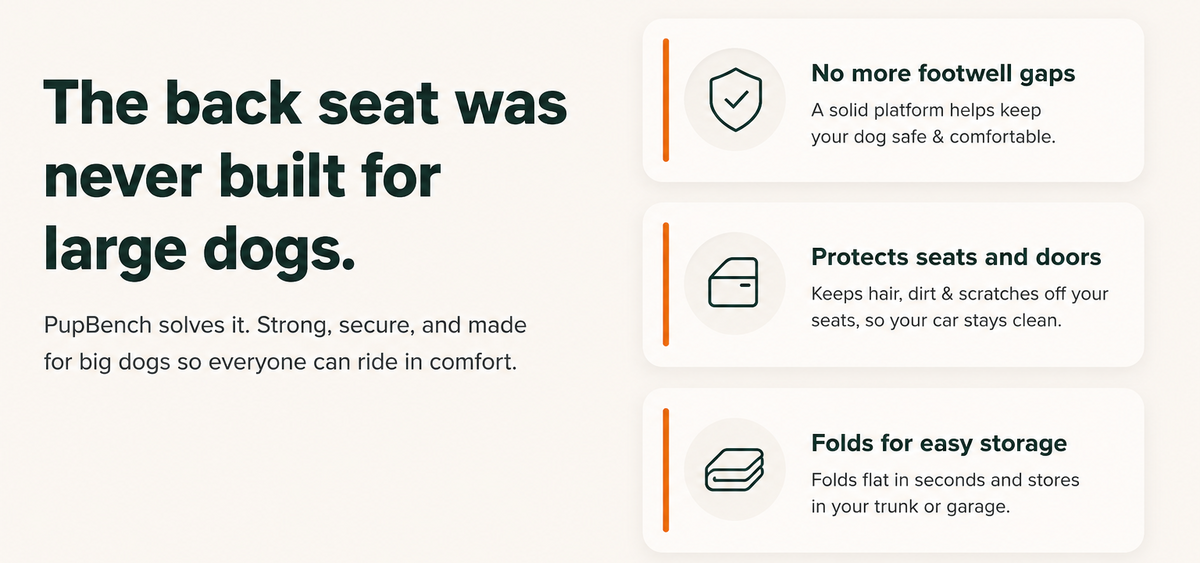
A supported bottom helps turn the back seat into a wider, steadier travel surface.
Dog car hammocks are popular because they solve a real problem: they keep fur, dirt, and paws off the back seat while creating a barrier between the front and rear seats. But not all hammocks feel the same to a dog. The biggest difference is whether the hammock has a hard bottom or a soft hanging bottom.
If you are choosing between a hard bottom dog car hammock and a soft dog car hammock, the better option depends on your dog's size, confidence in the car, and how much support you want the back seat to provide.
What is a soft dog car hammock?
A soft dog car hammock is usually a flexible fabric cover that attaches to the front and rear headrests. It drapes across the back seat and rises behind the front seats, helping block the footwell and catch dirt. It is lightweight, easy to fold, and often less expensive than structured designs.
Soft hammocks work well for some dogs, especially smaller dogs or calm riders who mostly stay in one spot. They are also useful when your main goal is protecting the seat from hair and light mess.
The limitation is support. Because the middle section is fabric, it can sag into the footwell. A larger dog may feel the gap under their paws, lose usable space, or avoid lying down because the surface does not feel stable.
What is a hard bottom dog car hammock?
A hard bottom dog car hammock adds a structured support panel over the rear footwell area. Instead of only hanging between the headrests, it helps create a wider, flatter platform across the back seat. Many owners also call this style a dog back seat extender.
This design is especially useful for medium and large dogs because it gives them more room to stretch out. The stable base can also help dogs who feel uncertain in the car, older dogs who dislike bracing their legs, and dogs who shift positions on longer rides.
The PupBench Road Bed is built around this idea: extend the back seat, add a more comfortable travel surface, and still protect the car from everyday dog mess.
Soft hammock pros and cons
A soft hammock may be the right choice when you want something simple and your dog does not need much support.
Common advantages include:
- Lightweight and easy to store
- Usually quick to install
- Good for basic fur and dirt protection
- Often budget-friendly
- Works for smaller dogs who stay settled
Common drawbacks include:
- Can sag into the footwell
- May not give large dogs enough usable space
- Can bunch or shift under heavier paws
- Less comfortable for dogs who want to lie flat
- May feel unstable on long drives
Hard bottom hammock pros and cons
A hard bottom hammock or back seat extender is better when comfort and space matter as much as cleanliness.
Common advantages include:
- Creates a flatter, more stable backseat area
- Gives large dogs more room to lie down
- Helps cover the footwell gap
- Can reduce slipping and bracing during normal driving
- Often feels more like a travel bed than a seat cover
Common drawbacks include:
- Usually takes up more storage space than a thin hammock
- May require more careful measuring before purchase
- Can cost more than a basic soft cover
- May be more than you need for a very small dog
Which is better for large dogs?
For large dogs, a hard bottom design is usually the stronger choice. Large dogs need room to turn around and settle without half of their body sliding toward the floor. If a soft hammock sags, your dog loses the exact space the hammock was supposed to create.
A supported platform also makes the back seat easier to use on longer drives. Your dog can spread out more naturally, and you can protect the seats without piling towels, blankets, or makeshift fillers into the footwell.
Which is better for SUVs?
SUV owners often choose a dog hammock because the rear seat area is wide and used for many different routines: errands, hikes, beach days, road trips, and daily daycare pickup. A hard bottom hammock can be especially helpful in SUVs because it gives dogs a larger, more level area while still keeping the rear passenger space protected.
If you fold seats often or switch between cargo and passenger use, check that the design can be folded away when you need the back seat for people.
Which is easier to clean?
Cleaning depends more on the material than the structure. A good soft hammock and a good hard bottom hammock should both resist moisture, wipe clean after everyday messes, and remove for deeper cleaning. The difference is that a hard bottom design may catch more dirt across a larger surface because it covers more usable space.
For real life, that is usually a good trade. It is easier to clean a removable cover than to remove fur and mud from upholstery, floor mats, door seams, and the back of the front seats.
How to choose between them
Choose a soft hammock if your dog is small, calm, and mostly needs a barrier for hair and dirt. Choose a hard bottom hammock if your dog is medium to large, nervous in the car, older, long-bodied, or likely to use the full back seat.
You should also choose a hard bottom design if you are tired of fixing blankets, towels, or loose covers after every trip. A structured setup is more of a real travel system, while a soft hammock is more of a protective layer.
The bottom line
Soft hammocks are simple and useful, but they are not always enough for dogs who need space and support. Hard bottom dog car hammocks are better for owners who want the back seat to feel stable, covered, and comfortable.
If that sounds like what your dog needs, see the PupBench Road Bed. It combines back seat extender support with water-resistant protection, making it a practical upgrade from a basic soft hammock.