Dog Back Seat Extender
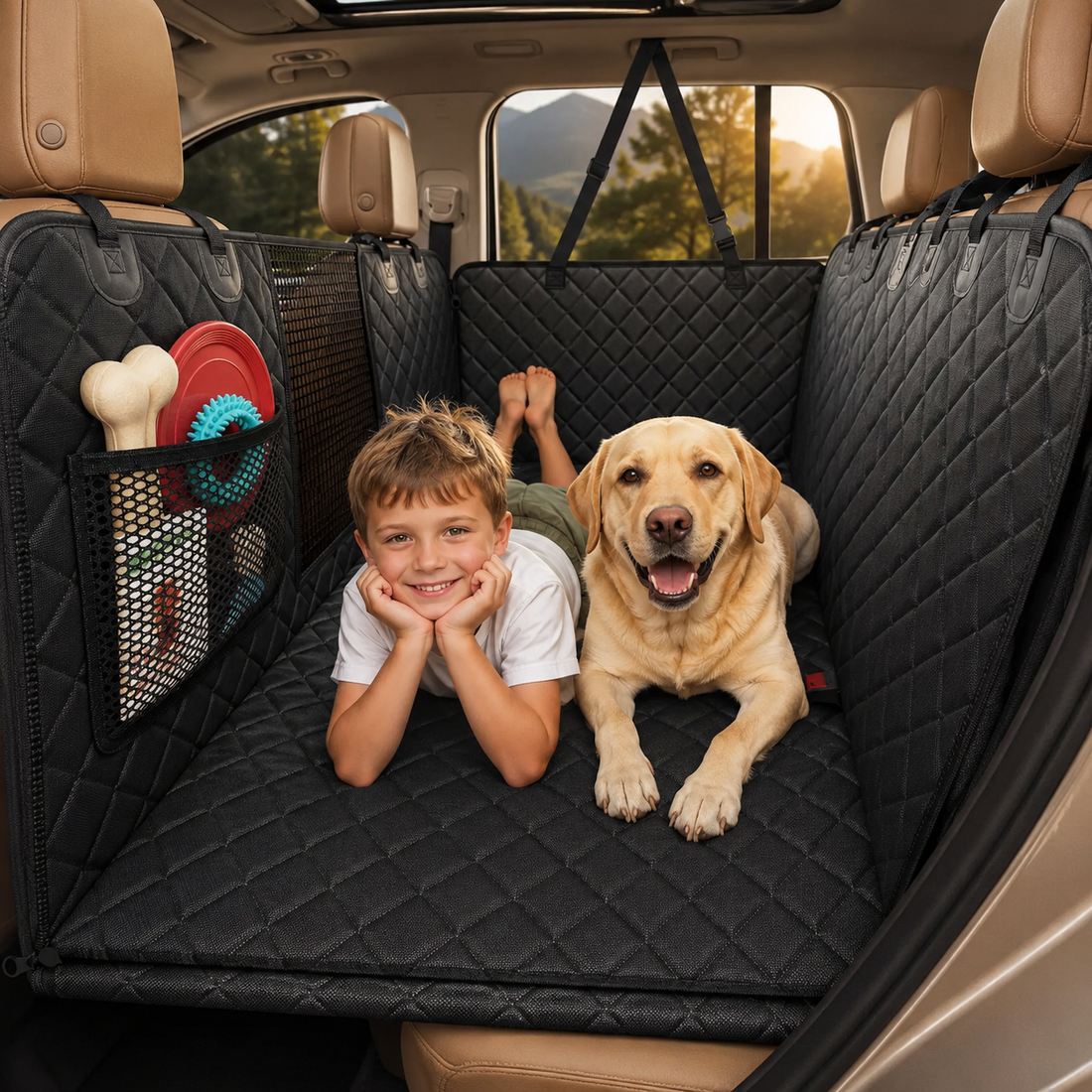
A dog back seat extender is built for one simple problem: the rear seat is often too narrow for a dog to sit, turn, and lie down comfortably. The open footwell behind the front seats wastes space and can make large dogs brace, slide, or step into the gap during normal driving.
A good extender covers that gap and creates a broader backseat platform. For dog owners who use the car every week, that means more usable space for the dog and less mess on the actual upholstery.
What a dog back seat extender actually does
Most extenders combine seat protection with extra floor support. Instead of only draping fabric over the bench seat, they add structure over the footwell so the dog has more surface area. That is especially helpful for large breeds, long-bodied dogs, senior dogs, and dogs who like to lie sideways.
- Covers the open footwell behind the front seats
- Creates a wider resting surface across the back seat
- Protects the seat from fur, mud, drool, and scratches
- Helps reduce sliding on everyday turns and stops
- Makes cleanup easier after parks, hikes, and road trips
For a ready-made hard-bottom setup, see the PupBench Road Bed. It is designed to extend the back seat, protect the upholstery, and give dogs a flatter place to ride.
Who should use one?
A back seat extender makes the most sense when your dog is too large for the seat cushion alone, when you drive an SUV or truck with a deep rear footwell, or when your dog shifts around because there is not enough stable room. It is also useful if you travel with kids, gear, or a second dog and need a cleaner, more organized back seat.
It may not be necessary for very small dogs who ride in a booster seat or dogs who travel in a crate. The question is whether your current back seat gives your dog enough supported space.
What to check before buying
Measure the rear seat width, the distance from the rear seat edge to the back of the front seats, and the height and shape of the rear headrests. Most hammock-style systems need adjustable headrests for the straps. Also check whether your dog uses a harness, because the best setup should leave access to seat belt buckles.
FAQ
Is a back seat extender the same as a dog hammock?
No. A soft hammock mainly protects the seat and creates a barrier. A back seat extender adds supported surface area over the footwell.
Is it safe by itself?
No car seat cover should be treated as a restraint. Use a properly fitted dog seat belt or harness with any extender.
Does it fit every car?
No. Fit depends on rear seat width, headrest style, front seat position, and the size of your dog. Always measure first.