
Dog Back Seat Extender: What It Is and Who Needs One
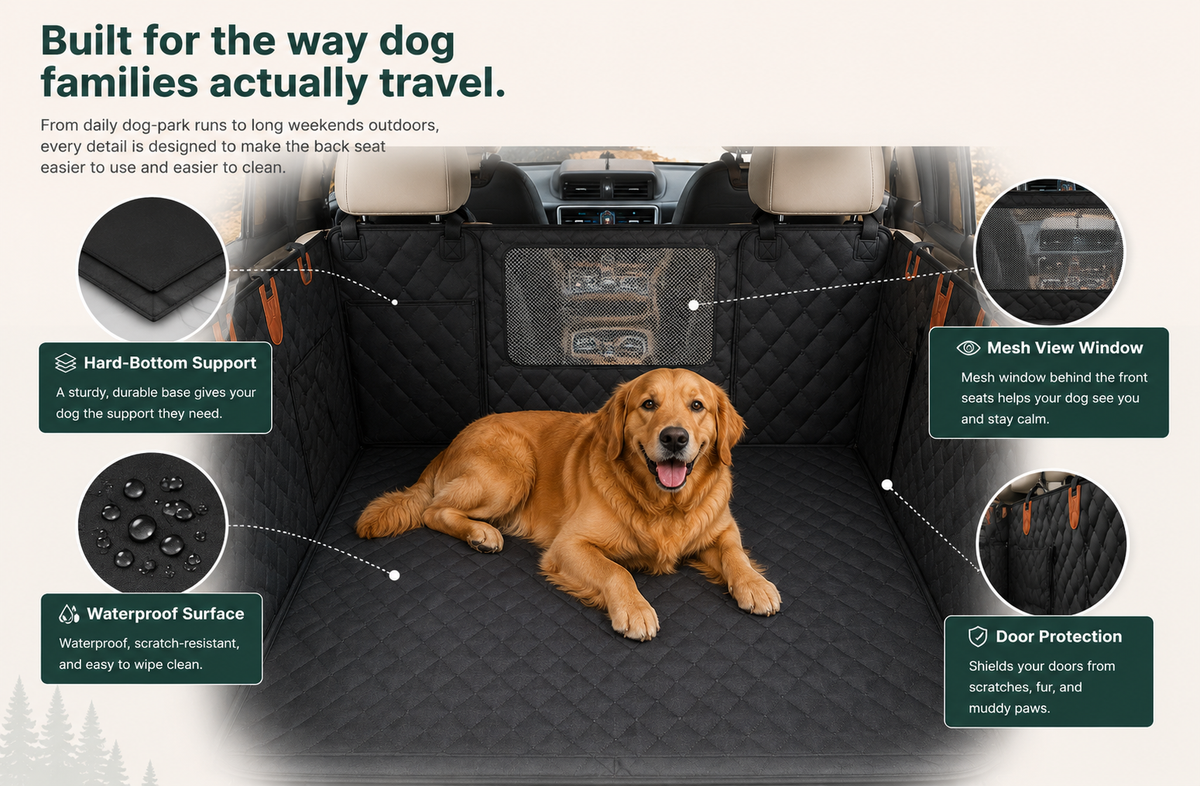
A back seat extender helps cover the footwell gap and gives dogs more usable room.
A dog back seat extender is a travel accessory that fills or covers the gap between the rear seat and the front seats. Instead of leaving the footwell open, it helps create a wider, flatter surface across the back seat. For many dogs, especially medium and large dogs, that extra supported space can make car rides more comfortable and easier to manage.
If you have ever watched your dog slide toward the floor, balance on the edge of the seat, or struggle to lie down in the back seat, a back seat extender may solve a problem that a regular seat cover cannot.
What does a dog back seat extender do?
A dog back seat extender turns more of the rear passenger area into usable dog space. Depending on the design, it may include a hard bottom support panel, a hammock-style barrier, seat protection, side coverage, and attachment straps that connect to the headrests.
The main goals are simple:
- Cover the footwell gap behind the front seats
- Create a flatter area for your dog to sit or lie down
- Protect the rear seat from fur, mud, drool, and scratches
- Help your dog stay more settled during normal driving
- Make cleanup easier after trips
The PupBench Road Bed is one example of this category. It combines back seat extender support with a dog car seat cover, so the back seat becomes both more comfortable for your dog and easier to keep clean.
How is it different from a regular dog seat cover?
A regular dog seat cover mainly protects the seat cushion and sometimes the seat back. It may be shaped like a bench cover or a soft hammock. That can be enough if your dog is small, calm, and does not need much room.
A back seat extender does more. It helps support the area over the footwell, which gives your dog extra space and reduces the feeling of a narrow bench. For large dogs, that difference can be significant. Instead of trying to fit on the seat cushion alone, your dog has a broader surface for turning around and lying down.
Who needs a dog back seat extender?
A back seat extender is especially useful for:
- Large dogs who use most of the back seat
- Long-bodied dogs who need room to stretch out
- Older dogs who do not like bracing or slipping
- Anxious dogs who settle better on a stable surface
- Dogs who step or slide into the rear footwell
- Owners who want better seat protection than towels or blankets provide
- SUV, truck, and sedan owners who use the back seat for regular dog travel
It is also helpful for road trips. A dog who can lie down comfortably is usually easier to travel with, and a stable setup can reduce the constant shifting that spreads fur and dirt around the cabin.
Who may not need one?
Not every dog needs a back seat extender. If your dog is very small, rides in a crate, uses a booster seat, or only takes short trips around town, a basic cover may be enough. If your car's rear footwell is already blocked by another safe travel setup, you may not need extra extension.
The key question is whether your dog needs more supported surface area. If the back seat already works well, keep it simple. If your dog seems cramped, unstable, or restless, an extender is worth considering.
What should you look for?
Good back seat extenders should be practical, secure, and easy to clean. Look for:
- A supported base that does not sag under your dog
- Water-resistant material for wet paws and spills
- Adjustable straps that attach securely to headrests
- Coverage for the seat, seat back, and door-side areas
- A surface that can be wiped clean after daily use
- A foldable design if you switch between dogs and passengers
- Access for a dog seat belt or travel harness
Measure your rear seat before buying. Check width, seat depth, and headrest positions. A good extender should fit securely without forcing the front seats into an uncomfortable position.
Is a back seat extender safe?
A back seat extender can make the rear seat more comfortable and reduce the chance of your dog stepping into the footwell during normal driving, but it should not be treated as a restraint. Your dog should still travel with a properly fitted dog seat belt or harness.
Think of the extender as the platform. The harness is what helps keep your dog secured. The best travel setup uses both.
Is it useful for SUVs?
Yes. SUVs often have roomy rear seats, but the footwell gap still limits how much space a dog can comfortably use. A back seat extender can make the rear row feel more like a dog travel bed while keeping the actual upholstery protected.
This is especially useful if your SUV is used for outdoor routines, parks, weekend trips, or everyday dog errands. Instead of cleaning the whole back seat after each drive, you can clean the removable dog travel surface.
The bottom line
A dog back seat extender is for owners who want the back seat to work better for their dog, not just stay covered. It is most useful for medium and large dogs, long trips, SUVs, and dogs who need a flatter, more stable place to ride.
If you want one setup that extends the back seat and protects it from everyday dog mess, take a look at the PupBench Road Bed. It is designed for dog families who want a cleaner car and a more comfortable backseat space without relying on loose blankets or towels.